
01
Fibreglass batt insulation
The cost-fair choice for a clean, even fill in open framed cavities.
Fibreglass batt insulation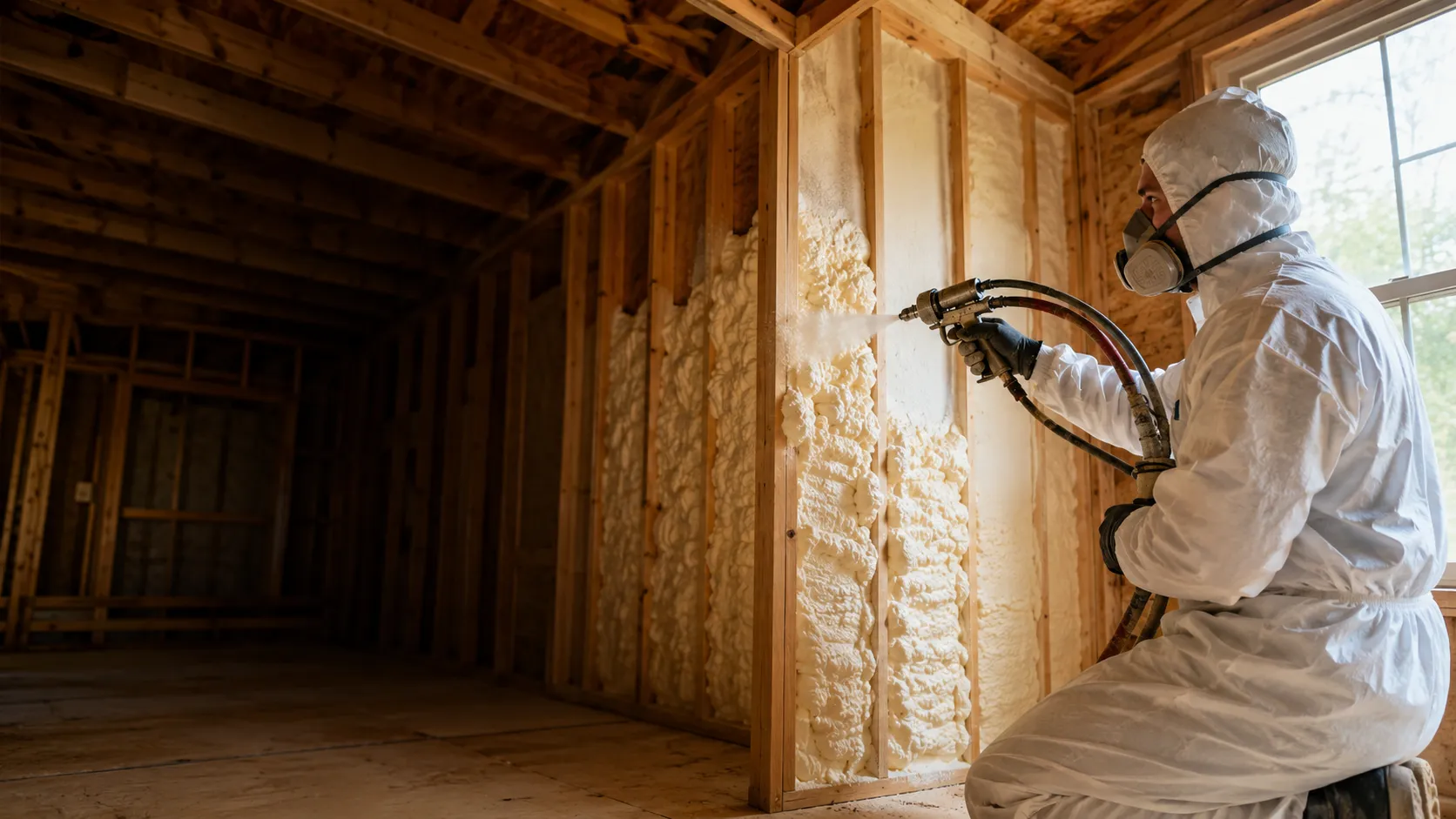
Spray foam insulation contractor in Abbotsford
Spray foam insulation is a polyurethane foam that's sprayed in place, expands, and seals gaps in one step, so it stops both heat loss and air leaks. Khaira Insulation installs spray foam insulation Abbotsford homeowners and builders rely on — open and closed cell foam for rim joists, crawl spaces, additions, and awkward cavities — across the Fraser Valley for homes and commercial buildings. We've worked the trade since 2015, and we never put a firm price over the phone before seeing the job.
2015
Working in the Fraser Valley since
500+
Insulation projects completed
10
Crew members on the team
2 yr
Workmanship warranty
What is spray foam insulation?
Spray foam insulation starts as a liquid and is sprayed onto the surface, where it expands within seconds and hardens into place. As it expands it fills the gaps, cracks, and odd corners that a pre-cut batt simply can't, which is what makes it both an insulator and an air barrier in a single step.
That air-sealing is the real difference. Most heat doesn't just conduct through a wall — it leaks out through gaps around the framing, the rim joist, and penetrations. Fibreglass slows heat but air still moves around it; spray foam air sealing closes those leaks off, so the building holds its temperature better and feels less drafty. The material is a two-part polyurethane spray foam, mixed at the gun as it's applied. There are two types, open cell and closed cell, and which one we use depends entirely on the job.
From the residential spray foam insulation Abbotsford homeowners need to commercial work, it's installed honestly by a since-2015 crew, and we're a spray foam insulation company Abbotsford trusts to quote only after we've seen the job. Khaira Insulation Ltd. is a residential and commercial insulation contractor in Abbotsford, BC, installing fibreglass, spray foam, attic blown-in, sprinkler box, and commercial fire stop insulation for homeowners, builders, and general contractors across the Lower Mainland.
The decision buyers compare on
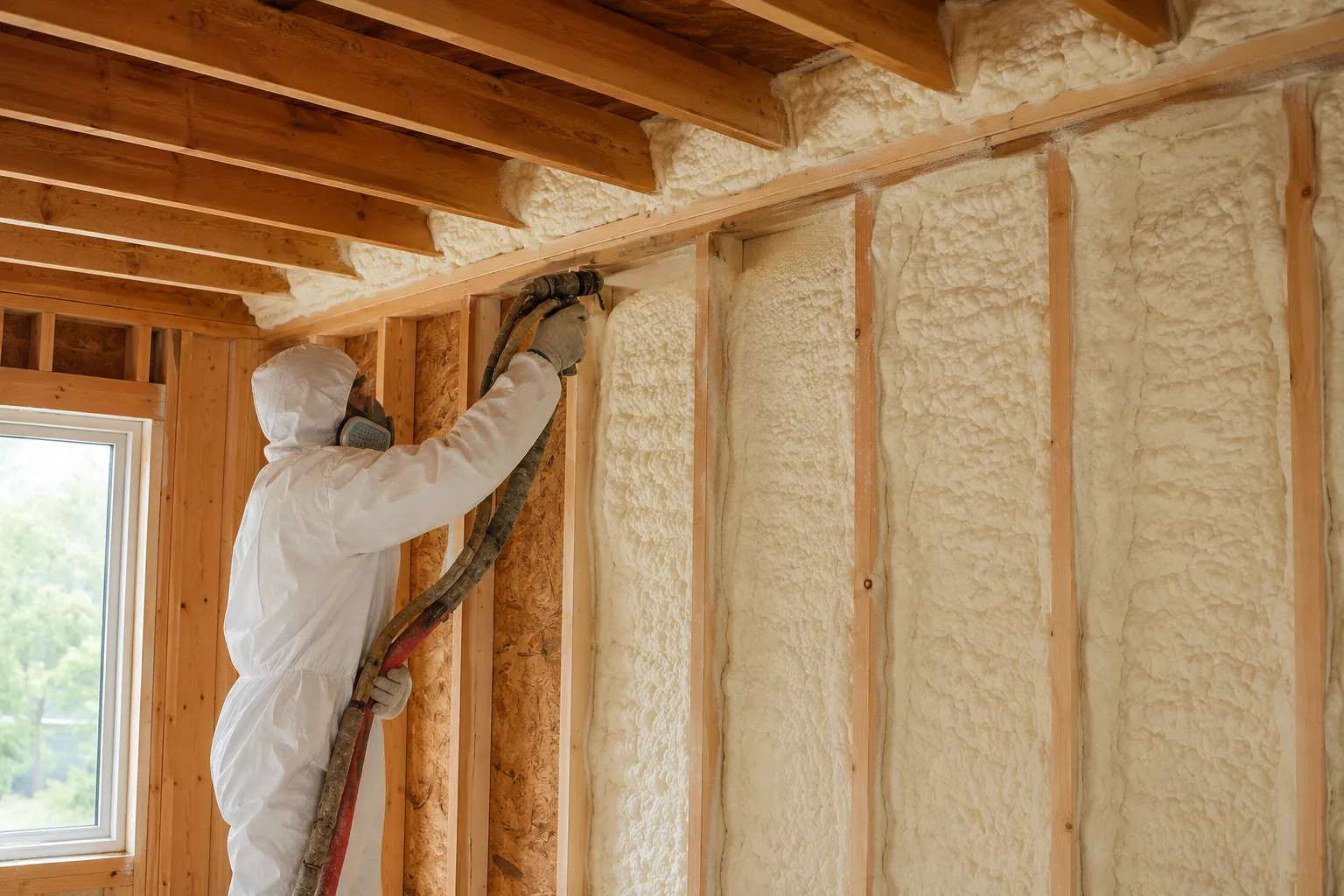
Open cell spray foam insulation and closed cell spray foam insulation are both polyurethane, but they behave differently. Open-cell spray foam insulation is softer and lighter, around R-3.5 per inch — it expands more to fill a cavity, costs less, and is a fit for interior walls and budget-driven jobs where air sealing matters but moisture isn't the main concern. It still needs a vapour barrier to meet code. Closed-cell spray foam insulation is dense and rigid, around R-6 to R-7 per inch — it packs more insulation into less space and, at about two inches, also acts as a vapour control layer, which makes it the one for rim joists, crawl spaces, and below-grade spots where moisture is in play.
| Open cell | Closed cell | |
|---|---|---|
| R-value per inch | around R-3.5 | around R-6 to R-7 |
| Density | soft, light | rigid, dense |
| Vapour control | needs a separate barrier | acts as vapour control at ~2 inches |
| Best for | interior walls, budget jobs | rim joist, crawl space, below grade |
| Cost per inch | lower | higher |
We tell you which one your job actually calls for on the site visit — and we don't default to the pricier one just because it's pricier.
Foam or fibreglass
Here's where we differ from most spray foam pages: we install both spray foam and fibreglass, so the recommendation comes from the job, not from what we'd rather sell. Spray foam earns its higher cost where air sealing is the whole point — a cold rim joist, an addition tied into an existing wall, a crawl space, or an awkward gap a batt can't seal cleanly. Those are the spots where foam pays for itself. As a rebate-eligible material in some assemblies, spray foam can also factor into a wider energy upgrade — our guide to CleanBC and utility insulation rebates explains what counts.
But plenty of jobs don't need it. When you've got an open, standard stud cavity that just needs a clean, even fill, a properly installed fibreglass batt does the job for less money. Paying for foam there is paying for sealing you don't need. If your job leans toward batts, that's an honest answer, and our fibreglass batt insulation page covers it. We'd rather match the right system than upsell the wrong one.
Where spray foam fits
Spray foam isn't for every cavity, but in the right spots nothing else does the job as well.
The band of framing above the basement is a classic cold, leaky spot. Closed-cell foam seals and insulates it in one pass — the single highest-value place to use foam in many homes.
On the Sumas and Matsqui flats the water table sits high, so below-grade moisture is a real concern in a lot of Abbotsford crawl spaces. Closed-cell foam adds insulation and vapour control together, which is why it is the standard for crawl spaces here.
Tying new framing into an old wall leaves gaps that batts struggle to seal. Foam closes them off.
Builders use foam in targeted assemblies where air sealing or a tight vapour control layer matters most — the kind of air-tightness the BC Building Code keeps pushing newer homes toward.
We work with homeowners, builders, and general contractors, and we're comfortable scheduling around the other trades on an active site. That includes commercial spray foam insulation work — warehouses, shops, and tenant-improvement projects where air sealing or fire-rated assemblies are on the drawings.
How Khaira installs spray foam insulation
Dawinder does not price spray foam over the phone. He checks the area, looks for moisture or air movement, and measures before quoting, so the number reflects the actual job.
01
Share your city, the property type, the area you want sealed, your timeline, and photos if you have them.
02
Khaira visits, checks moisture, ventilation, and access, measures the area, and gives a free site-based quote.
03
The crew sprays the agreed scope with quality material from trusted local suppliers, then Dawinder checks the finished work. Backed by a 2-year workmanship warranty.
Honest cost guidance
No Abbotsford contractor sets honest price expectations on-page, so here's straight talk instead of a dodge. A few things drive what a spray foam job costs:
What we won't do is quote a firm price over the phone. Dawinder learned that the hard way early on — he priced an older house blind off a phone description, the job needed far more material than expected, and he finished it at a loss rather than break his word. Since then, the final price comes after a free on-site visit, every time.
For a deeper breakdown of board feet, foam type, BC documentation, and rebate cautions, read our spray foam insulation cost in BC guide.
Safety and ventilation
Modern spray foam is safe to live with once it's fully cured — cured foam is inert and sits sealed inside the assembly. The care happens during installation, and it's on the contractor to handle it.
While foam is being sprayed and while it cures, occupants should be out of the house. A proper crew uses containment and ventilation to control the odour and keeps you out until the cure window has passed — you should never come home to a freshly sprayed attic and a chemical smell with no warning. Before we spray, we also check for moisture, because spraying foam over a hidden moisture problem locks it in behind a layer that's expensive to remove.
One honest note for after the job: sealing a house tight is the goal, but a very tight home sometimes needs mechanical ventilation (an HRV or ERV) to keep the air fresh. "Build tight, ventilate right" — we'll flag it if your project calls for it rather than leaving you with stale air.
Why homeowners and builders choose Khaira
We don't claim to be insured or certified, because we're honest about where the business stands today. What we stand behind is the workmanship — as owner Dawinder Khaira puts it, "do it once, do it properly."
A recent project
A homeowner in Chilliwack had two houses that needed full insulation before a sale deadline and had struggled to find a contractor who could work within budget. We took the job, and when the deadline got tight, the crew worked overnight. That's not our usual practice, but the job needed it. Both homes were finished on time, and the owner recommended us for the next one.
"I really appreciate the work that you did. You took the job when I was not able to find a contractor that could match my budget, and you finished the project on time before the deadline... With minimum supervision you did a fantastic job. Your crew were very respectful to my family members, to everyone, and I'm very glad that I hired you."
Where we work
We install spray foam insulation across Abbotsford, the Fraser Valley, and the Lower Mainland. As a spray foam insulation contractor Abbotsford homeowners and builders call directly, we cover spray foam insulation Fraser Valley jobs from the same crew. Not sure if you're in range? Call us. Same-day service is sometimes available across the Lower Mainland depending on schedule and location.
Related insulation services
Most jobs combine systems — here is what the same local crew handles alongside spray foam.
01
The cost-fair choice for a clean, even fill in open framed cavities.
Fibreglass batt insulation02
Tops up a thin attic and cuts heat loss for less than foam would cost.
Attic blown-in insulation03
Fire-rated batt and mineral wool packed into rated assemblies on commercial builds.
Fire stop insulation for commercial buildsSee everything Khaira installs on the insulation services page, or request a free on-site quote and Dawinder will recommend the right system for your space.
Questions
There's no flat rate. The price depends on the area and thickness, whether it's open or closed cell, how easy the space is to reach, and any prep like removing old insulation. Closed-cell costs more per inch than open-cell. Because every job is different, we give a free on-site quote rather than a firm price over the phone. Call 778-536-1713 and we'll come see it.
Open-cell is softer and around R-3.5 per inch — a fit for interior walls and budget jobs. Closed-cell is dense, around R-6 to R-7 per inch, and acts as a vapour control layer at about two inches, which makes it the right choice for rim joists, crawl spaces, and below-grade areas. We confirm which one your job needs on the site visit.
It depends on the job, and we install both, so our answer isn't tied to selling one. Spray foam is worth it where air sealing matters — rim joists, additions, crawl spaces, and gaps a batt can't seal. Fibreglass batts do the job for less in open, standard cavities that just need an even fill. We'll tell you straight on the site visit.
Spray foam is worth it where air sealing is the point — sealing a cold rim joist or a crawl space where a batt would leave gaps. In those spots it pays for itself in comfort and performance. In an open wall cavity that just needs a clean fill, a fibreglass batt is the better value. So "worth it" depends on where it's going, not on the product alone.
Once it's fully cured, spray foam is inert and safe to live with, sealed inside the wall or ceiling. The care is during installation: occupants stay out of the house while it's sprayed and cures, and a proper crew uses containment and ventilation to control odour. We also check for moisture before spraying, so a hidden problem doesn't get sealed in.
Installed correctly and kept dry, spray foam can last the life of the building — decades. It doesn't sag or settle the way some loose materials can. What protects its lifespan is a clean install over a sound, dry surface, which is why the moisture check before spraying matters.
Use spray foam where a batt can't seal tightly: the rim joist above the basement, crawl spaces, additions tied into old framing, and awkward gaps. Closed-cell foam is the standard for rim joists and crawl spaces, especially in the Fraser Valley's damp climate. For open, standard cavities, a fibreglass batt is usually the smarter spend.
No. We don't give firm final quotes over the phone, because spray foam pricing depends on the area, open vs closed cell, access, and site condition — none of which a phone call shows. Dawinder visits the site, checks it properly, and then gives a site-based quote. The on-site visit is free.
Call Khaira Insulation Ltd. or send your project details to arrange a free, honest site visit for your insulation project.