01
Spray foam insulation
The better call where air sealing matters — rim joists and additions.
Spray foam insulation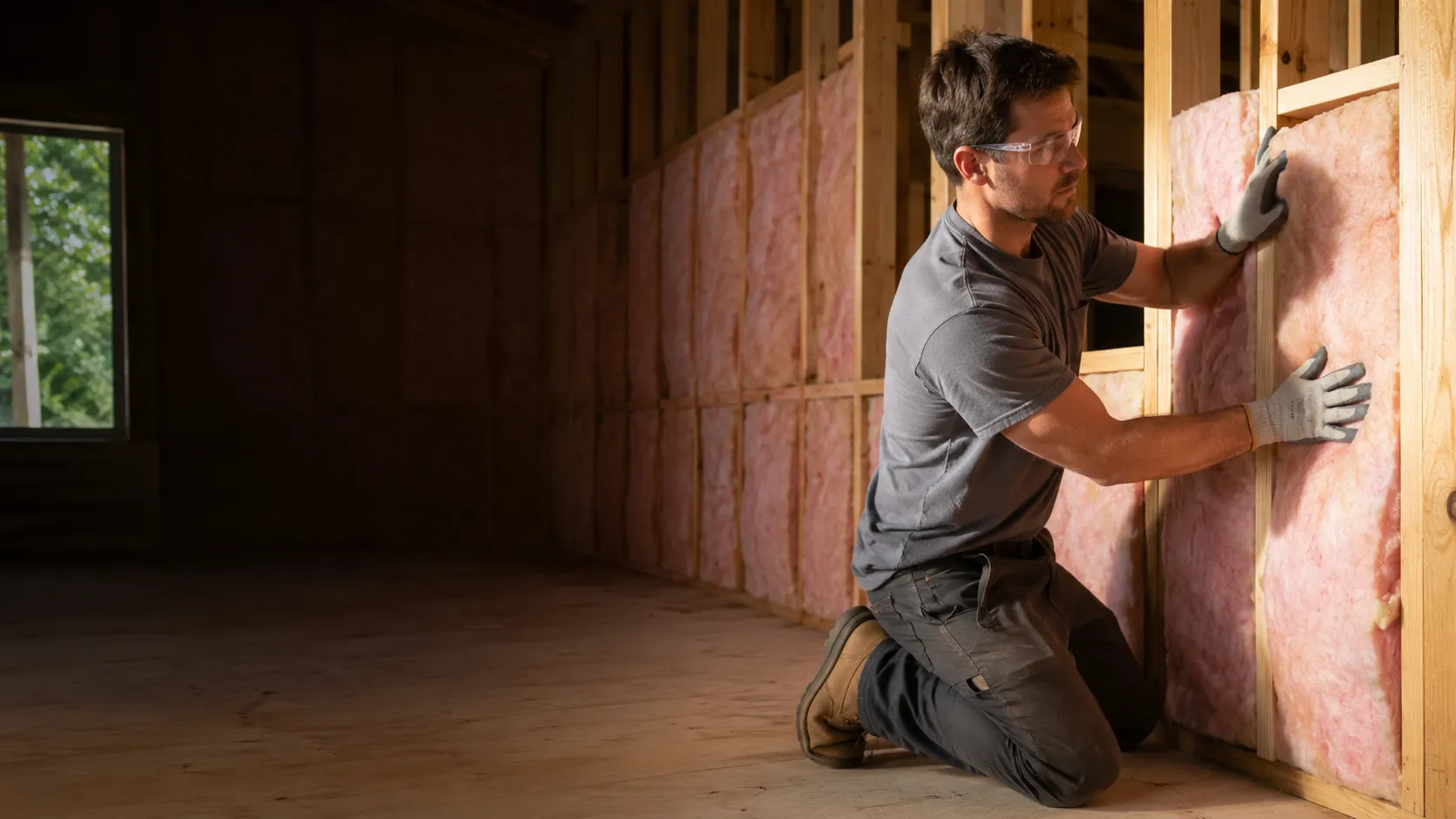
Fibreglass insulation contractor in Abbotsford
Fibreglass insulation is a glass-fibre material installed as batts, rolls, or blown-in fill to slow heat loss and quiet a building. Khaira Insulation installs fibreglass insulation in Abbotsford and across the Fraser Valley, in walls, ceilings, and basements for homes and commercial buildings. We've worked the trade since 2015, run a 10-person crew, and give free on-site quotes. We never put a firm price over the phone before we've seen the job.
2015
Working in the Fraser Valley since
500+
Insulation projects completed
10
Crew members on the team
2 yr
Workmanship warranty
What is fibreglass insulation?
Fibreglass insulation is made from fine glass fibres spun into a light, flexible mat. It traps pockets of air, and those air pockets are what slow the movement of heat through a wall or ceiling. It is the most common insulation in Canadian homes, mostly because it is affordable and, when the details are handled properly, straightforward to install correctly.
It comes in a few forms, and the right one depends on the space:
You'll see it spelled both "fibreglass" (the Canadian spelling) and "fiberglass" (the American one), and you'll see fibreglass batts called fiberglass batts too. Same material, same product, whether the order reads fibreglass insulation or fiberglass insulation. Khaira Insulation Ltd. is a residential and commercial insulation contractor in Abbotsford, BC, installing fiberglass, spray foam, attic blown-in, sprinkler box, and commercial fire stop insulation for homeowners, builders, and general contractors across the Lower Mainland.
Where it works best
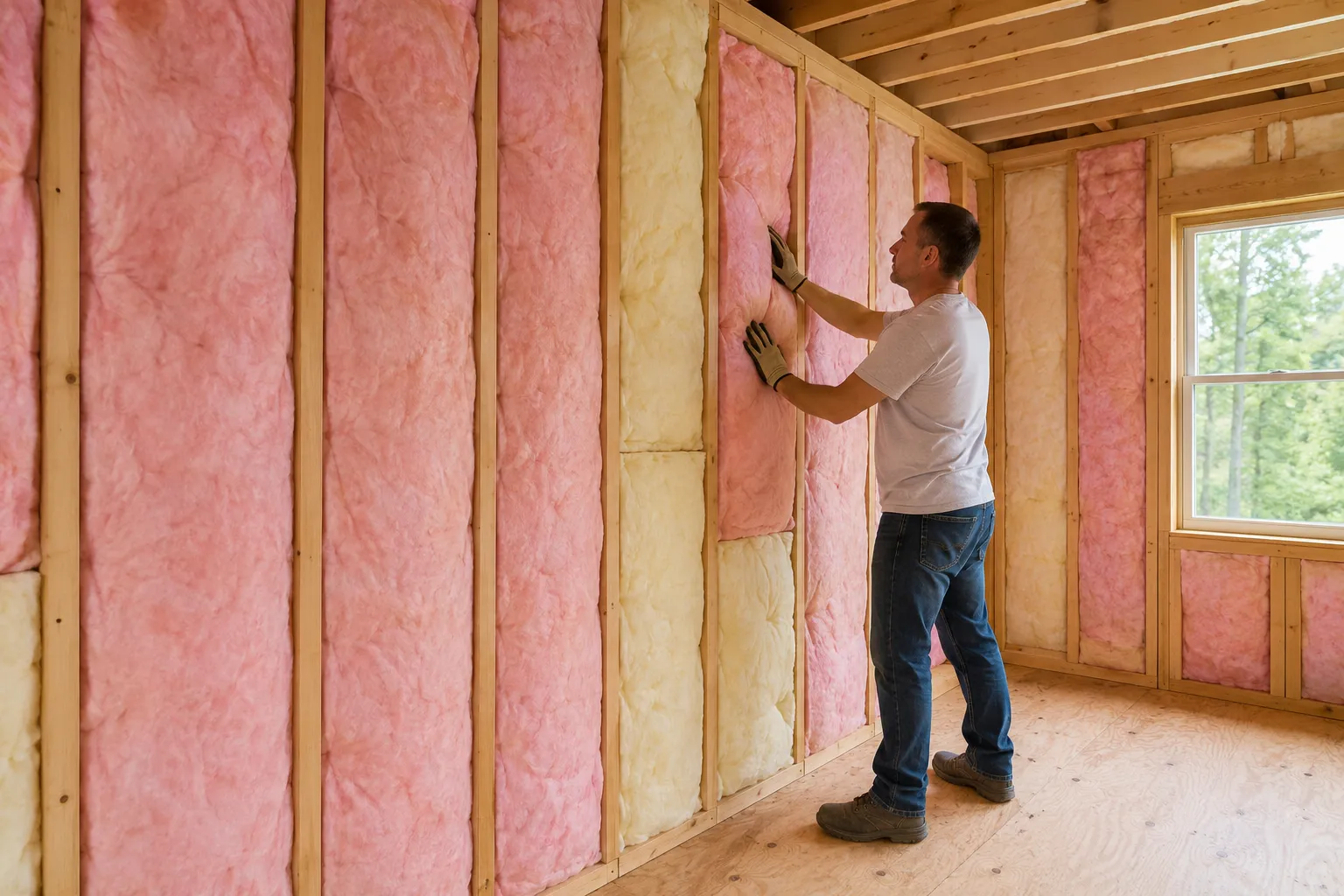
Fibreglass batts and rolls suit most of the framed spaces in a typical Fraser Valley build. We install fibreglass wall insulation, fibreglass ceiling insulation, and basement and garage insulation, with the system matched to where it's going.
Walls are the most common job. Fibreglass insulation for walls goes into new construction, renovations, and home additions, and it is also where most interior soundproofing happens.
In ceilings and floors between levels, fibreglass ceiling insulation adds thermal comfort and cuts noise travel between storeys.
Basements and garages are their own challenge: in basement development and garage conversions, comfort and moisture control both matter, so the assembly has to account for both.
We build interior sound walls, using fibreglass batts insulation as wall insulation for soundproofing between rooms, around media rooms, home offices, and shared walls.
Benefits
Done right, fibreglass insulation does more than warm a room. The first thing homeowners notice is thermal comfort and lower energy bills: fewer drafts and steadier indoor temperatures through cold, wet Fraser Valley winters. The same batts that hold heat in winter keep heat out in summer, so the comfort runs year-round.
It also helps with noise. Fibreglass batts in interior walls and ceilings absorb sound and keep it from travelling room to room. And paired with the right vapour barrier and good ventilation, fibreglass helps manage moisture instead of trapping it; glass fibre itself does not feed mould.
The catch is that all of this depends on the install. As Dawinder puts it, "insulation only works when the small details are done right": air sealing, even coverage, no compressed batts, no gaps, and the vapour barrier handled the way BC building code expects.
Residential and commercial
Khaira installs fibreglass insulation for both homes and commercial buildings. We work with homeowners, builders, and general contractors, and we're comfortable on a job site that's still active.
New homes, renovations, additions, basement development, and garage conversions for homeowners across the Lower Mainland.
Fibreglass insulation for builders and general contractors on commercial projects, scheduled around the rest of the trades on site.
R-value guidance for BC
R-value measures how well insulation resists heat flow, and a higher R-value means more resistance. The fibreglass insulation R-value you need depends on the part of the home and the assembly, so treat the figures below as typical guidance for Fraser Valley homes, not a fixed rule. We confirm the right target for your specific job on the site visit.
| Area of the home | Typical effective R-value target | Common fibreglass approach |
|---|---|---|
| Exterior walls (2x6 framing) | around R-22 | fibreglass batts sized to the cavity |
| Exterior walls (2x4 framing) | around R-14 | fibreglass batts sized to the cavity |
| Attics / ceilings | around R-40 to R-50 | blown-in fibreglass (see attic page) or high-loft batts |
| Basement walls | around R-12 to R-20 | fibreglass batts with the correct vapour barrier |
| Interior sound walls | R-value is secondary | fibreglass batts chosen for sound absorption |
The right R-value is only half the job. A high-R batt that's been compressed, cut short, or installed with gaps won't hit its rated number. Even coverage and a proper vapour barrier matter as much as the figure on the package.
How we install fibreglass insulation
Our fibreglass insulation installation process is built around one rule Dawinder learned the hard way early on: see the site before quoting it.
01
You call, we ask about the property and the work, and we book a visit. We don't give a firm final quote over the phone, because fibreglass insulation cost depends on site condition, access, and project size, and a phone description can't show that.
02
We check the cavities, attic or wall condition, ventilation, and any moisture concerns, then measure properly.
03
You get a site-based quote. Once it's accepted, we schedule the crew and order quality materials from trusted local suppliers.
04
The crew fits the batts or rolls cleanly, sealing and covering evenly, with the vapour barrier handled to code.
05
Dawinder checks the finished work, and the job is backed by a 2-year workmanship warranty with follow-up over the next few months.
What drives the price
We don't publish flat pricing because no two jobs are the same. A few things move the number.
Square footage and how many areas are being insulated.
Open new-construction walls are quicker than tight retrofit cavities or a finished basement.
Older homes, awkward access, or old insulation that needs removing first all change the work involved.
A higher target means more or thicker material.
If old material has to come out first, see insulation removal. For honest numbers, the only fair way is a free on-site quote. We've seen what happens when a contractor prices an older house blind over the phone. Dawinder did it once early on, lost money finishing the job properly, and stopped quoting that way for good.
Fibreglass vs other materials
Fibreglass isn't the only option, and it isn't always the right one. A quick honest comparison:
We'll tell you straight which one fits your project on the site visit. We'd rather match the right system than upsell the wrong one.
Why homeowners and builders choose Khaira
We don't claim to be insured or certified, because we're honest about where the business stands today. What we stand behind is the workmanship.
A recent project
A homeowner in Chilliwack had two houses that needed full insulation before a sale deadline and had struggled to find a contractor who could work within budget. We took the job, and when the deadline got tight, the crew worked overnight. That's not our usual practice, but the job needed it. Both homes were finished on time, and the owner recommended us for the next one.
"I really appreciate the work that you did. You took the job when I was not able to find a contractor that could match my budget, and you finished the project on time before the deadline... With minimum supervision you did a fantastic job. Your crew were very respectful to my family members, to everyone, and I'm very glad that I hired you."
Where we work
We install fibreglass insulation across Abbotsford, the Fraser Valley, and the Lower Mainland. Looking for fibreglass insulation near you? Not sure if you're in range? Call us. Same-day service is sometimes available across the Lower Mainland depending on schedule and location.
Related insulation services
Fibreglass is rarely the only thing a project needs — here is what the same local crew handles alongside it.
01
The better call where air sealing matters — rim joists and additions.
Spray foam insulation02
Tops up an under-insulated attic and cuts heat loss.
Attic blown-in insulation03
Tear out old or damaged insulation before a fresh install.
Insulation removal and replacementSee the full range on the insulation services page, or request a free on-site quote and owner Dawinder Khaira will recommend the right system for your space.
Questions
Fibreglass insulation is a glass-fibre material (batts, rolls, or blown-in fill) that traps air to slow heat loss. It's the most common home insulation in Canada: it's affordable and performs well across the seasons, and it installs cleanly when the coverage, air sealing, and vapour barrier are done right. So, is fibreglass insulation good? For most standard walls, ceilings, and basements, it's a solid choice.
Yes. Once it's installed behind walls and ceilings and the vapour barrier is in place, fibreglass insulation is safe to live with. The glass fibres can itch skin and irritate during installation, which is why our crew handles it with the right gear. After the job is closed up, it sits sealed inside the assembly.
Fibreglass insulation can last the life of the building, often several decades, as long as it stays dry and undisturbed. It loses performance mainly when it gets wet, is compressed, or is damaged by pests or renovations. Keeping moisture and ventilation under control is what protects its lifespan.
In most BC walls, ceilings, and basements, yes. Fibreglass insulation is paired with a vapour barrier to manage moisture and meet building code. We handle the vapour barrier as part of the install and confirm the right approach for your assembly on the site visit.
There's no flat rate. Fibreglass insulation cost depends on the size of the job, where it's going, site access, and the R-value target. Because of that, we give a free on-site quote rather than a firm price over the phone. Call 778-536-1713 and we'll come see the job.
It depends on the job. Fibreglass costs less and suits most standard walls, ceilings, and basements. Spray foam seals tighter and adds an air barrier, which is worth the higher cost in specific spots. We'll recommend the honest fit on the site visit. See our spray foam insulation page for more.
Call Khaira Insulation Ltd. or send your project details to arrange a free, honest site visit for your insulation project.